
Transforming IT Infrastructure: FI01's Migration from AWS to DigitalOcean
In an ever-evolving digital landscape, businesses must stay ahead by adopting more scalable, cost-effective, and reliable IT solutions. FI01, a forward-thinking company, recognized the need to upgrade its infrastructure to ensure long-term stability and reduce operational costs. Seeking to address performance scalability and cost management concerns, FI01 embarked on a strategic migration from AWS to DigitalOcean. This migration aimed to leverage Kubernetes' capabilities to enhance reliability while significantly reducing expenses.
Challenges
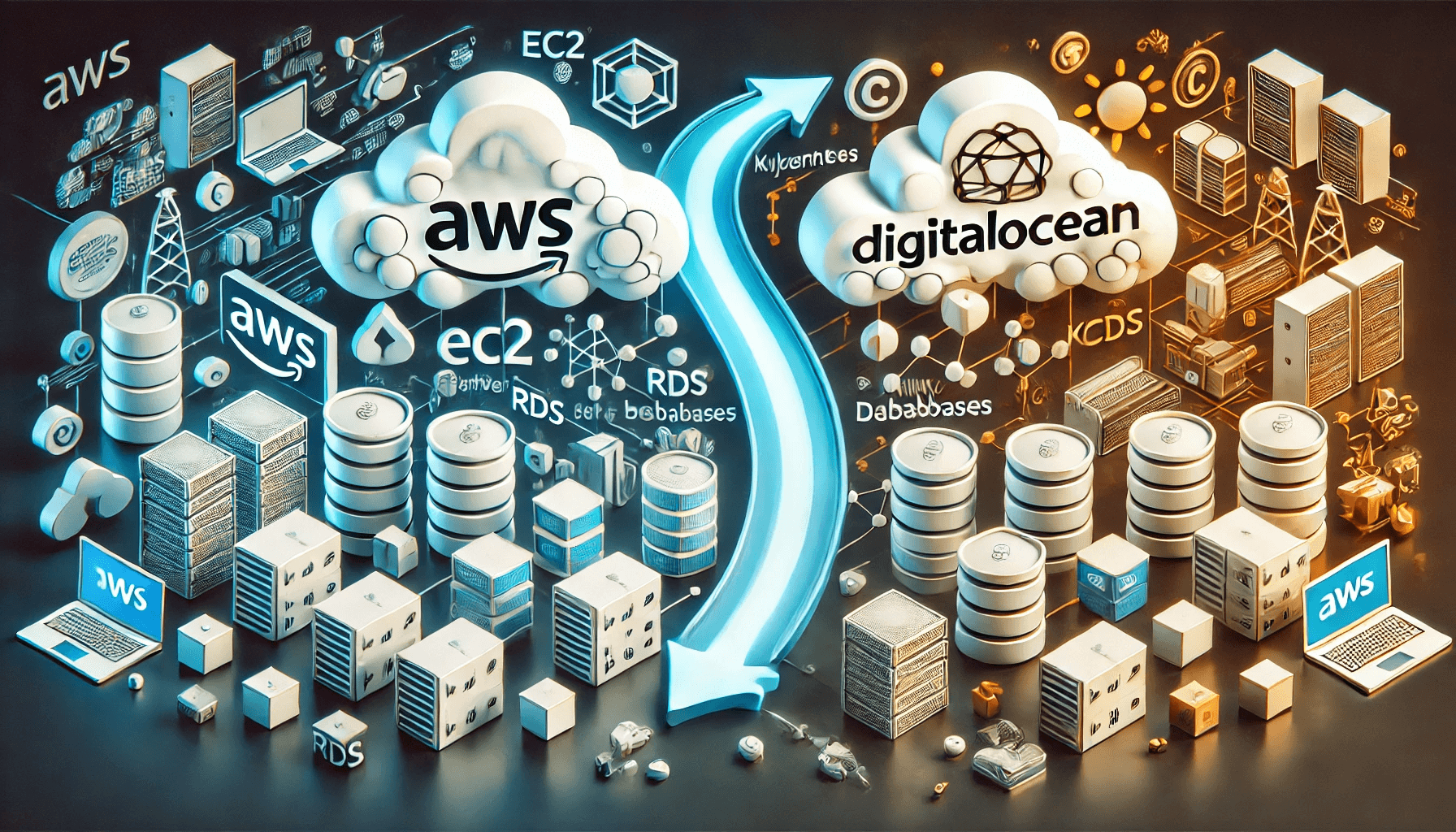
FI01 faced several challenges with its existing infrastructure. The company's IT setup was hosted on AWS. It comprised two EC2 servers for client-facing and back-office services, a MySQL RDS server, a load balancer, and a Docker container registry. While functional, this configuration incurred high monthly costs of around $380 to $400. This high operational expense was unsustainable in the long term, and FI01 was keen to explore more economical options that would maintain the quality of service. Additionally, as the company looked toward future growth, it needed a solution that could scale effectively without escalating costs or operational complexity.
Solution
To address these challenges, FI01 migrated its entire infrastructure from AWS to DigitalOcean, a platform known for being cost-effective without sacrificing performance. Two managed Kubernetes clusters were deployed—one for staging and one for production. Kubernetes was selected for its efficient container management, reliable performance, and ability to scale seamlessly for future growth. The migration also involved setting up a managed MySQL database within DigitalOcean, providing a streamlined database management solution that required no manual oversight while ensuring data integrity and optimal performance.
FI01 optimized costs further by moving its Docker images to GitHub's Docker Registry, eliminating additional container management costs. An optional load balancer was deployed on DigitalOcean to manage traffic efficiently, ensuring high availability for client services. Regarding traffic management, FI01 adopted Traefik Proxy, an open-source alternative to Ambassador Ingress. Traefik's cost-effectiveness and robust traffic management capabilities made it a perfect fit for FI01's needs. Additionally, GitHub Actions were used to automate continuous integration and deployment processes, streamlining application deployment and testing within the Kubernetes environment. Cert Manager was installed to ensure secure connections, automating SSL certificate management and securing communications without manual intervention.
Outcomes
The migration to DigitalOcean delivered substantial benefits to FI01. The most immediate result was a dramatic reduction in costs. Monthly infrastructure expenses dropped from the $380-$400 range to just $100-$140, representing a savings of over 60%. This reduction in costs was a critical win for FI01's financial strategy. Additionally, the Kubernetes-based infrastructure allowed the company to scale applications quickly, meeting increased demand without inflating costs or facing technical bottlenecks.
FI01 also improved reliability by leveraging DigitalOcean's managed services and Kubernetes' inherent resilience. The infrastructure became more stable, minimizing downtime and ensuring continuous service availability. Furthermore, the migration resulted in significant technical optimization. The newly architected infrastructure not only met FI01's current demands but was also well-prepared for future growth, thanks to the efficiency of Kubernetes and DigitalOcean's managed services. The integration of Traefik and Cert Manager enhanced system security by providing encrypted connections and effective traffic management, further bolstering the company's system reliability and data security. Finally, by automating deployments and relying on managed services, FI01 significantly reduced the complexity of managing its IT infrastructure. This allowed the company to focus more on business development rather than being bogged down by technical maintenance.
Conclusion
FI01's migration from AWS to DigitalOcean is a prime example of how strategic technological shifts can substantially improve cost efficiency, scalability, and reliability. By leveraging Kubernetes, DigitalOcean, and GitHub's tools, FI01 transformed its infrastructure into a scalable and cost-efficient foundation ready to support future growth. This migration not only addressed the company's immediate concerns but also laid the groundwork for a more agile, secure, and manageable IT environment. Through these forward-thinking decisions, FI01 is now better equipped to adapt and thrive in an increasingly competitive digital landscape.